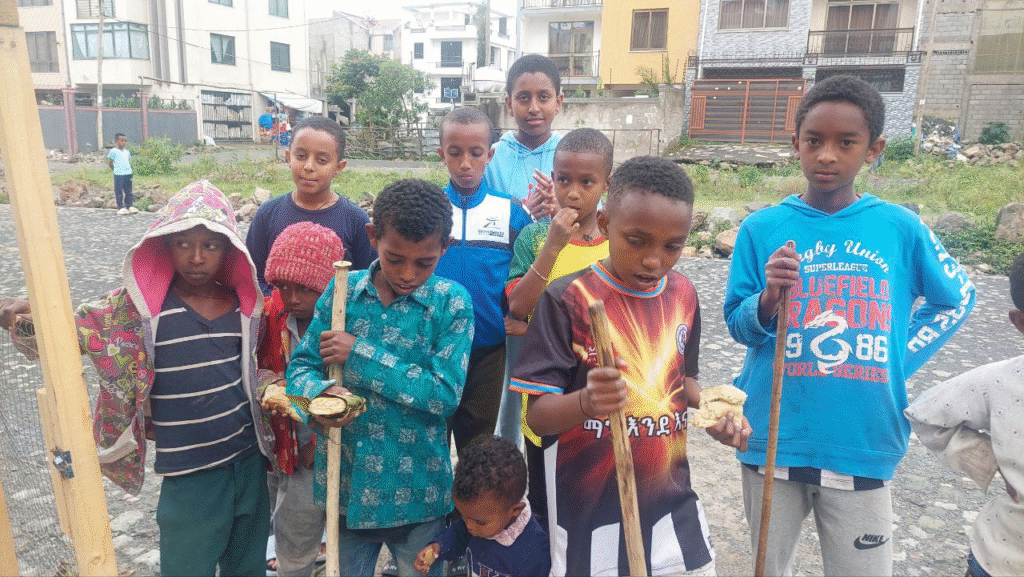
For thousands of years, Ethiopian communities have preserved a rich tradition of gender equilibrium, exemplified through seasonal festivals that honor boys and girls in turn. From Nehasie 1 to 16 (corresponding to August in the Gregorian calendar), the celebration of Buhie takes center stage, dedicated to boys and young men. During this time, participants engage in traditional songs and the ritualistic “GIRAF” a symbolic whip cracking that resonates with the unearthly essence of Debre Tabor Mountain, while invoking blessings in the name of Jesus Christ and the spirit of Buhie itself.
Subsequently, from Nehasie 16 to Meskerem 1, the focus shifts to girls with the vibrant festivities of Ashendye (also known as Ashenda and others), which extend through to Enkutatash, the Ethiopian New Year. These customs capture themes of harmony, joy, and mutual respect, underscoring the timeless significance of balance within Ethiopian cultural heritage.
In our village today Nehasie 13/2017 EC (August 19/2025), we proudly celebrate with our boys through communal songs, solidarity, and shared pride, complemented by the offering of MULMUL DABO prepared by my wife. As a father of two boys and responsible citizen in cultural heritage, I extend heartfelt wishes for a happy BUHIE to all boys and men, celebrating this enduring legacy of Ethiopian identity.