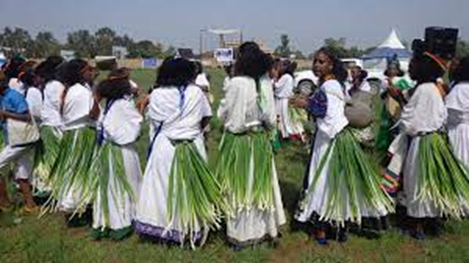
In Ethiopia, particularly in the northern regions of Amhara and Tigray, the vibrant festivals known as Ashendy, Ashenda, Shadey, and Solel represent a profound cultural tradition celebrating women and girls, with roots tracing back thousands of years. These festivals, often collectively referred to as the Ethiopian Girls’ Festival, are believed to have originated in the ancient Axum region around 400 AD or even earlier, predating the introduction of Christianity to Ethiopia. They mark the conclusion of the two-week Filseta fast, a period of abstinence observed by Ethiopian Orthodox Christians in honor of the Assumption of the Virgin Mary, symbolizing her ascension to heaven. Typically spanning from August 22 to around August 30 in the Gregorian calendar (corresponding to Nehase 16 to early Meskerem in the Ethiopian calendar), the celebrations involve young girls and women dressing in colorful traditional attire often white embroidered dresses adorned with jewelry and grass skirts while engaging in rhythmic singing, dancing, and drumming as they move from door to door collecting gifts and praises from the community.
These traditions embody a deep-seated emphasis on gender equality and women’s empowerment, long before modern global theories on the subject emerged. Historically, the festivals promote unity, equality, and the fight against discrimination toward women, serving as a platform for female expression, joy, and societal recognition. The festivals are exclusively for virgin girls and young women, transcending religious boundaries to include participants from diverse backgrounds, and they emphasize themes of sisterhood, beauty, and liberation. In some narratives, the period leading up to these women’s celebrations (Nehase 1-15) is associated with boys’ festivities, creating a balanced cultural rhythm that allocates equal time for both genders, though specific details on the boys’ counterpart vary by region and require further local ethnographic study.
Ethiopian Girls’ Festival,” highlighting their role in preserving oral traditions, performing arts, and social practices that empower women. Unfortunately, due to limited global research and under appreciation of such indigenous practices, the world has largely overlooked this practical, time tested framework for gender equality.
As Ethiopians and Africans, it is essential to amplify and promote these invaluable traditional practices, sharing them as contributions to global dialogues on gender equity rather than solely adopting external frameworks. By doing so, these festivals can inspire broader recognition and adaptation worldwide, enriching humanity’s collective heritage.